
We also supply covers on their own, for owners and contractors who place them with their own teams.
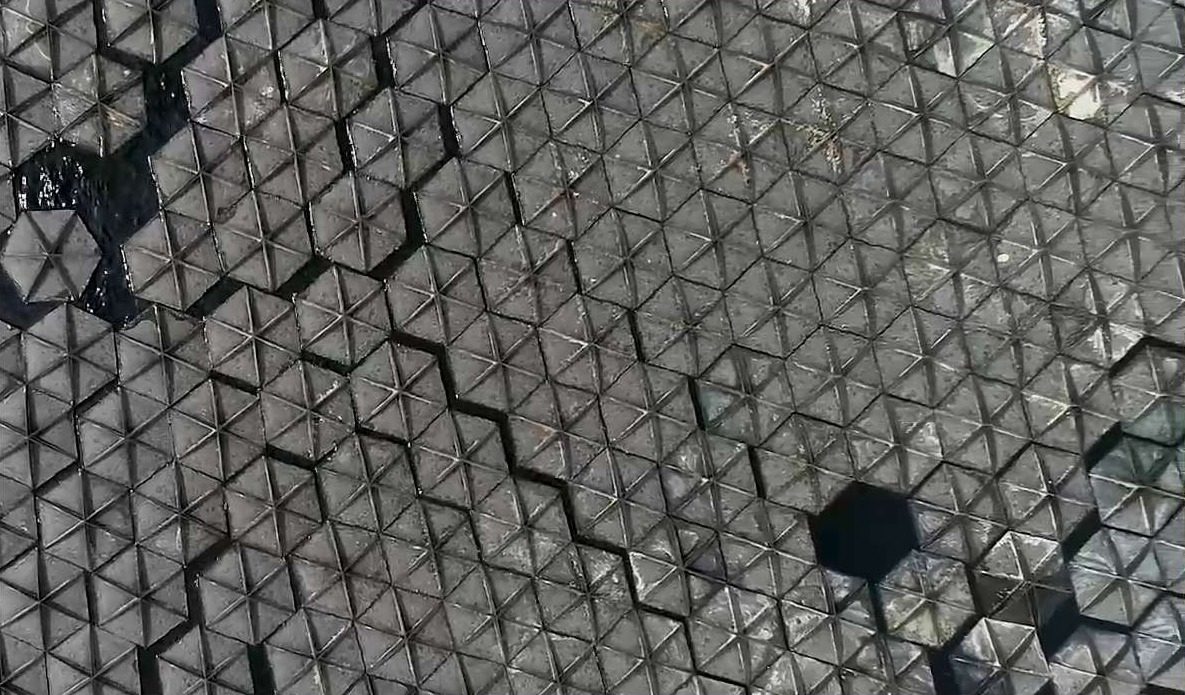
Modular hexagonal floating covers
The floating covers we supply are modular: hexagonal elements made of UV-stabilised plastic, placed on the surface, that fit together on their own into an almost continuous layer. The elements are ballasted so they sit low on the surface and stay in place in the wind.
- Rise and fall with the liquid level, with no anchoring, frame or edge structure
- Can be placed on a pond, reservoir or tank that is already in use, without draining it
- Rain passes between the elements into the pond, so there is no water to pump off the cover
- Elements can be pushed aside for sampling, inspection and maintenance
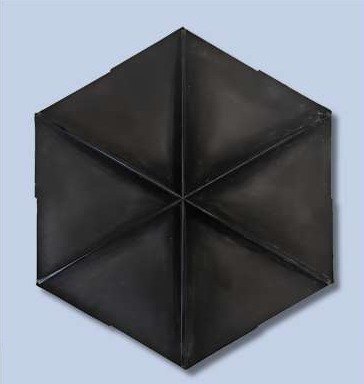
Top view
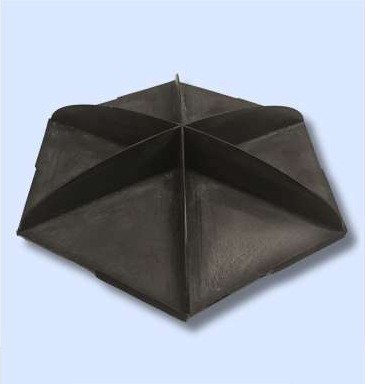
Inclined view
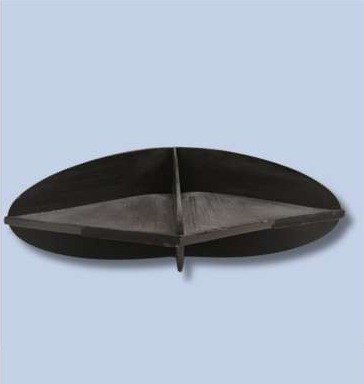
Side view
What a floating cover does
- Reduces evaporation from water reservoirs and irrigation ponds, which matters most in the Saudi summer
- Reduces odour and the release of gases and vapours from wastewater and industrial ponds
- Blocks sunlight, which limits algae growth and helps keep stored water clean
- Keeps birds off the liquid surface, which matters on oil and gas ponds and ponds holding hazardous liquids
- Reduces heat loss from warm liquids, and windblown dust and debris entering the pond
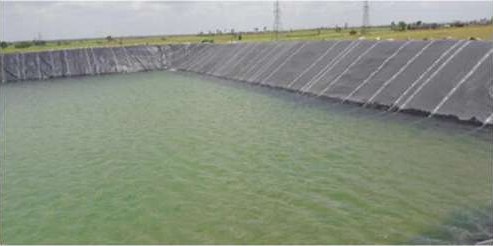
Open reservoir
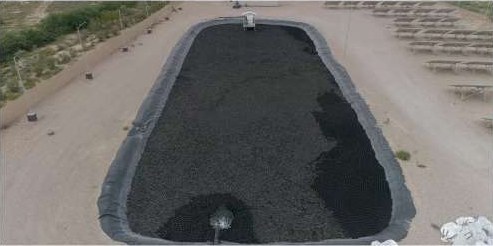
Covered pond
Where floating covers are used
Floating covers suit any pond where the liquid should stay in and the surface can be covered. They are not for evaporation ponds, which need an open surface to work.
- Water reservoirs, irrigation ponds and farm ponds
- Wastewater, sludge and leachate ponds
- Industrial and petrochemical ponds, including emergency ponds for hazardous liquids
- Oil and gas ponds, such as produced water ponds
- Open tanks and basins
Choosing the right cover
The right cover grade depends on the liquid and the site. Before we quote, we check these points with you and against the manufacturer's data:
- Chemical resistance to your liquid: its pH, its temperature, and any oil, solvents or hydrocarbons
- Stability in your site's wind, including when the pond is low or empty and the elements rest on the floor and slopes
- Protection for pump intakes, sumps and outlets, so the elements are not drawn in
- An anti-static grade where flammable vapours may be present
- Design life and UV resistance under the Saudi sun, backed by the manufacturer's data
- The environmental requirements that apply to your site, such as the Royal Commission for Jubail and Yanbu's environmental regulations, and your client's specification
- Floating cover elements
- HDPE liner
- Rain passes between the elements into the pond
- The elements rise and fall with the liquid level
- When the pond is low or empty, the elements rest on the floor and slopes
- A screen keeps the elements out of the pump sump
Installation
We install the covers we supply with our own crew, following the manufacturer's installation instructions. Most of the work is done from the bank and on the surface, so a pond can stay in service while the cover goes on.
- Offloading on site and checking the delivery against the packing list
- Placing the elements on the surface until the whole area is covered
- Fitting the protection around pump intakes, sumps and outlets
- A final check of coverage, and handover

Delivery in bulk bags
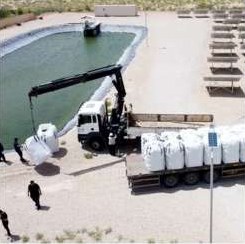
Offloading at the pond
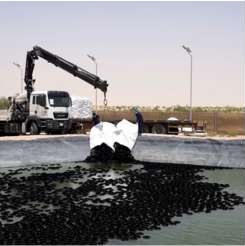
Releasing onto the water
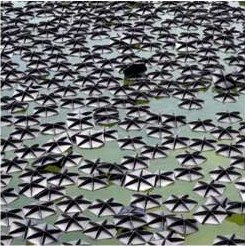
Spreading and fitting together
What to tell us for a quotation
- Pond or tank dimensions at the top and at the liquid level, the side slopes and the depth, or a drawing
- The liquid, with any data you have: pH, temperature, oil or hydrocarbon content
- What the cover is for: evaporation, odour and emissions, algae or birds
- How the level changes: kept full, or normally empty and filled only at times
- Pump intakes, outlets and access points
- Whether you need installation, or supply only
- The project location and when you need the cover
Liner and cover from one contractor
A floating cover protects what is in the pond; the liner keeps it in. As well as covering ponds, we line them with HDPE geomembrane and repair existing liners, so a new or existing pond can be lined and covered by one contractor.
Frequently asked questions
What is a floating cover?
A floating cover is a layer that floats on the surface of a pond, reservoir or tank to reduce evaporation, odour and emissions, algae growth and bird access. Modular covers are made of separate elements, often hexagonal, that fit together into an almost continuous layer and rise and fall with the liquid level.
Do you install floating covers?
Yes. We supply and install modular floating covers with our own crew, following the manufacturer's installation instructions. We also supply covers on their own for owners and contractors who place them with their own teams.
Can a floating cover be placed on a pond that is in use?
Yes. Modular floating covers are placed on the liquid surface without draining the pond, and need no anchoring, frame or edge structure.
Does a floating cover reduce evaporation?
Yes. Covering the surface shades the water and shelters it from the wind, which reduces evaporation from reservoirs and irrigation ponds. For the same reason, a cover is not used on an evaporation pond, which needs an open surface to work.
Can floating covers be used on wastewater and hazardous liquid ponds?
Yes, with a grade that suits the liquid. Tell us the liquid's pH, temperature and any oil, solvent or hydrocarbon content. Where flammable vapours may be present, an anti-static grade is needed.
What is the price of a floating cover per square metre?
We don't publish a fixed price, because it depends on the cover type and grade, the surface area, the liquid, whether you need installation, and the project location. Send us those details and we will quote.